You can also access my academic publications here:
Die Reinkarnation des Lesers als Autor / The reincarnation of the reader as author
You can buy the book at Amazon India or Amazon.com

The purpose of this dissertation is to redefine the relationship between classical Indian literature and modern German literature. Almost all the criticism surveyed has been an analysis of the influence of the sacred texts of India on German literature. The result was a refusal to acknowledge the writing of the Germans as a creative process. Their works were viewed as distortions of the original texts.
The perceptions of texts as sacred or profane is culturally rooted and German writers have often interpreted as profane that which the Indians consider sacred. This difference in perception explains why German writers have received certain themes from literature and restructured them within the framework of their own creative ambitions.
The dissertation focuses on the reception of Indian literature between the 3rd and 8th centuries A.D. by three modern German writers–Frank Wedekind, Lion Feuchtwanger and Hermann Hesse–and analyses the process by which these writers shed their role as reader and expand their own creative horizon by transforming the Indian material. A clear thematic and structural link between these three authors is provided by their reception of two genres in Indian literature, viz. the drama and the treatise (especially that on erotic love), because both genres deal with prostitution, and the ascetic-erotic-central concerns of these writers.
In his Das Sonnenspektrum, Wedekind destroys the idyllic concept offered by the Indian material. In the process he creates his own brand of aesthetized eroticism which is not unlike that in the Indian play. Feuchtwanger’s projection of the idyll in Vasantasena results from a conscious politicizing of language with a view to changing society. Certain key notions of philosophy which had served the Indian dramatist to reinforce the hierarchical structure of his society are altered by Feuchtwanger to mirror his own belief in a classless society. Hesse’s Siddhartha presents the idyll as a means of escaping the reality of society. He mixes mystical with idyllic elements and thus fails to achieve the pure form of the idyll and its potential for renewing lost values or creating new ones.
The concluding chapter of the dissertation provides points of reference to characterize the process of reception. These could be used paradigmatically to analyze problems of influence and reception in other works, especially when the source material originates in an alien culture.
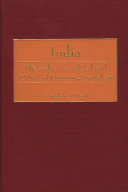
INDIA: THE SEDUCTIVE AND SEDUCED ‘OTHER’ OF GERMAN ORIENTALISM
You can buy this book at Amazon.in or Amazon.com
Germans of various disciplines not only encouraged but actively framed a discourse that gendered India through voyeuristic descriptions of the male and female body. This study challenges the German’s claim to an encounter with India projected on a spiritual plane of communion between kindred spirits and shows that such supposedly apolitical encounters are really strategies of domination. German participation in European Expansion can be perceived as collusion with the British imperialist administration inasmuch as it provided the latter with a justification for existing colonial rule and anticipated future colonial activity. Despite the optimism placed in the post of post-colonialism, the continued presence of European Orientalism can be felt in the late 20th century, hidden under the mantel of global capitalism.
Although Germany did not colonize India territorially, Germans of various disciplines not only encouraged but actively framed a discourse that gendered India through voyeuristic descriptions of the male and female body. German orientalist experiences of Hindu India have typically been excluded from post-colonial debates concerning European expansion, but this study challenges the German’s claim to an encounter with India projected on a spiritual plane of communion between kindred spirits and shows that such supposedly apolitical encounters are really strategies of domination. German participation can be perceived as collusion with the British imperialist administration inasmuch as it provided the latter with a justification for existing colonial rule and anticipated future colonial activity. Murti sheds light on the role that missionaries and women, two groups that have been ignored or glossed over until now, played in authorizing and strengthening the colonial discourse.
The intertextual strategies adopted by the various partners in the colonialist dialog clearly show that German involvement in India was not a disinterested, academic venture. These writings also betray a bias against women that has not been regarded, until now, as a key issue in the literature discussing Orientalism. Missionaries often actively fostered the British colonial agenda, while women travelers, even those who traveled as a means of escaping patriarchal structures at home, invariably abetted the colonizer. Despite the optimism placed in the post of post-colonialism, Murti concludes that the continued presence of European Orientalism can be felt in the late 20th century, hidden under the mantel of global capitalism.
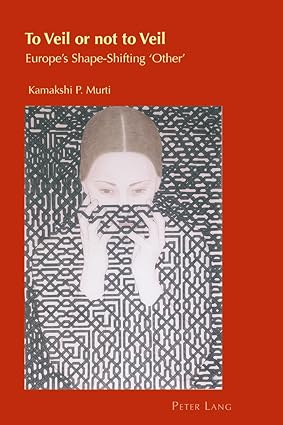
TO VEIL OR NOT TO VEIL: EUROPE’S SHAPESHIFTING ‘OTHER’
You can buy this book at Amazon.in or Amazon.com
Immigration has become a contentious issue in Europe in recent decades, with immigrants being accused of resisting integration and threatening the secular fabric of nationhood. The most extreme form of this unease has invented and demonized an Islamic ‘other’ within Europe. This book poses central questions about this global staging of difference. How has such anxiety increased exponentially since 9/11? Why has the Muslim veil been singled out as a metaphor in debates about citizenship? Lastly, and most fundamentally, who sets the criteria for constructing the ideal citizen?
This study explores the issue of gender and immigration in the national contexts of Germany and France, where the largest minority populations are from Turkey and North Africa, respectively. The author analyzes fictional works by the Turkish-German writers Emine Sevgi Özdamar and Zafer Şenocak and by Francophone writer Malika Mokeddem. All three deconstruct binary oppositions and envision an alternate third space that allows them to break out of the confines of organized religion. In the latter part of the book, the voices of young Muslim women are foregrounded through interviews. The concluding chapter on the pedagogical tool Deliberative Dialogue suggests ways to navigate such contentious issues in the humanities classroom.

 Kamakshi P. Murti
Recent Comments