TODAY MAGAZINE review.
Posted by: kamakshi
Posted in Uncategorized
Reviews for my “Lalli unveils a window”
Website reviews from Goodreads about my “Lalli unveils a window”
https://www.amazon.in/gp/customer-reviews/R3BW0CQ6UKCUI7?ref=pf_ov_at_pdctrvw_srp
https://www.amazon.in/gp/customer-reviews/R7VPGR3BWMMY5?ref=pf_ov_at_pdctrvw_srp
https://www.goodreads.com/review/show/7898701109
https://www.goodreads.com/review/show/7865229021
https://www.goodreads.com/review/show/7867975488
https://www.goodreads.com/review/show/7885431033
https://www.goodreads.com/review/show/7899501545
https://www.goodreads.com/review/show/7847373548?book_show_action=false
Posted in Uncategorized
Websites for “Murders Most Trans-Gressive”
https://www.amazon.com/dp/B0FL8SZKKK
https://www.amazon.co.uk/dp/B0FL8SZKKK
https://www.amazon.de/dp/B0FL8SZKKK
https://www.amazon.fr/dp/B0FL8SZKKK
https://www.amazon.es/dp/B0FL8SZKKK
https://www.amazon.it/dp/B0FL8SZKKK
https://www.amazon.nl/dp/B0FL8SZKKK
https://www.amazon.pl/dp/B0FL8SZKKK
https://www.amazon.se/dp/B0FL8SZKKK
https://www.amazon.co.jp/dp/B0FL8SZKKK
https://www.amazon.ca/dp/B0FL8SZKKK
https://www.amazon.com.au/dp/B0FL8SZKKK
Posted in Uncategorized
“Murders Most Transgressive”
Dear potential readers! Sad to say, my valiant attempts to enclose a couple of videos describing this my latest Leela/Meena murder mystery failed rather spectacularly! So here are some words that touch upon the themes that drive my story!
Transgressive?
Who defines the boundaries of morality?
Transgressive?
Who defines the boundaries of morality?
Who sets rules of behavior?
“Being oppressed means the absence of choices”
(bell hooks)
Indomitable sleuths

A story about bodies, voices, and stories brutally destroyed,
and yet never giving up the fight to claim their rightful place in society
Posted in Uncategorized
“Murders Most Trans-Gressive”
Introducing my latest Leela/Meena murder mystery set in the South Indian city of Chennai, and fraught with murder and mayhem! The book is available on Amazon.in
The following videos give you a frightening glimpse of how the most vulnerable in our society have very little recourse to safety from violence.
Posted in Uncategorized
Lalli unveils a window
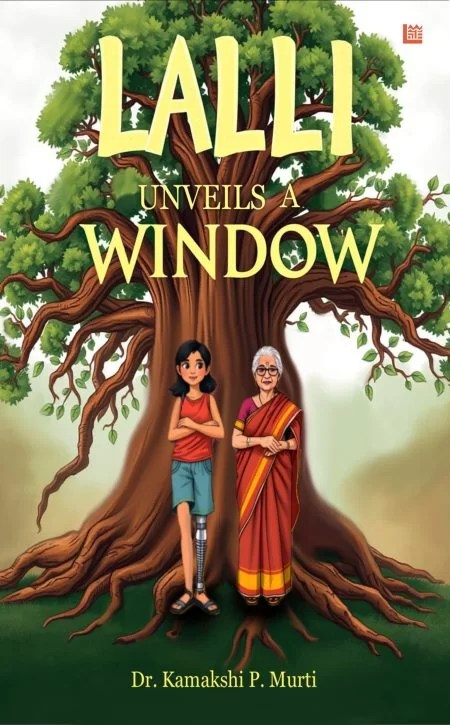
You, my reader, might question the value of the limerick that heralds each chapter in “Lalli unveils a window.” However, each limerick provides an appetizer for what is to come! Here are a couple of examples:
- There once was a gal who did swear
- She’d created a limb beyond compare
- If you pinched it, you’d hear
- An ‘OUCH’ oh so clear
- This limb that our Lalli did wear!
- There once was a boy who thought
- His parents and siblings were naught.
- He looked for a spark
- In places so dark
- That he cried out: “This isn’t what I sought!”
- When SWAT teams on television’s screen
- Do bulldoze their way to the scene
- We clap and we cheer
- To what does appear
- to be fatal for these guys so mean
- But Lalli and friends bore witness
- to real life police under duress,
- How they vanquished so quick
- With a charge oh so slick!
- Now the bad guys are stuck in their mess!
Happy reading!
Posted in Uncategorized
“Murders Most Trans-Gressive” – update!

Launch date coming up very soon! My female sleuths Leela and Meena face the biggest challenge of their lives in trying to solve the murders of members of the LGBTQ+ community in Chennai.
Posted in Uncategorized
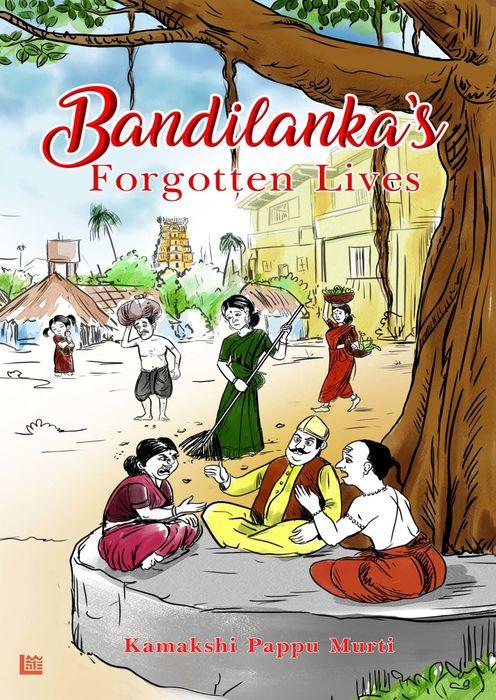
A story from my “Bandilanka’s Forgotten Lives”
A Child Rolls Beedis
"Mumtaz! Get up, my baby girl!"
Five-year-old Mumtaz shoved her skinny fists into her sleepy eyes.
“Already, Ammi? Do I have to?”
She felt her mother’s strong hand pull her up from the floor.
“Hurry up! Time is money! Here – take the neem 2 stick – chew properly on it if you don’t want your teeth to fall out! And your eyes – rub the sleep out of them.”
Mumtaz chewed on the neem and brushed her teeth with the bristles as she walked outside to the water pump. She turned her face upward to receive the gush of warm water. It felt so good.
“The eyes!” she thought and rubbed them. She ran back to the house. “Can’t miss today’s game.”
Her best friends Nimmi and Aliya were already so good at it. But she wanted to be the best. Her mother, older sister Salma, and three aunts were already busy at work. She snuggled close to her mother, and watched as the older woman picked up a pile of tobacco. For each beedi, she painstakingly placed the tobacco inside a dried leaf sourced from a local ebony tree, tightly rolled and secured it with a thread, then closed the tips using a sharp knife. When she had a bundle of 25, she placed the bundle in a wooden crate.
“Can I make one, Amma? Please?” Shaheeda Begum sighed.
“You have to promise to be careful. Yesterday, you destroyed so many. We can’t afford to …”
“No, no, Ammi! PLEASE! I promise, I’ll be so very careful.” She giggled. “I’m sure I can beat Nimmi and Aliya.”
Shaheeda Begum looked thoughtfully at her.
“Go to your sister! She’ll teach you.”
“Do I have to, Ammi? She scolds me and beats me.”
“Go, go! Don’t bother me. If we don’t meet today’s quota, you won’t have anything to eat. Salma, look after your sister.”
Older sister Salma cried out:
“She’s such a pest, Ammijaan!”
“Salma!”
Shaheeda Begum’s stern voice reverberated in the small room of their hut. Mumtaz ran over to her eleven-year-old sister, a ragged straw doll clutched in one clammy hand.
“Show me, Baji! Please? I won’t make trouble today, I promise. I’ll be very good.”
She sucked her thumb as she observed Salma working tirelessly, bent over the pile of tobacco and the stack of leaves. The daily quota for their household was 1500 beedis. Mumtaz slowly picked up a leaf and mimicked her sister’s movements. Soon the excitement of the game wore off and she got up.
“Where do you think you’re going?” Salma shouted.
“I’m tired, Baji! I want to play outside.”
Salma glanced at her mother and aunts. Shaheeda Begum beckoned to the little girl.
“Come here, child.”
Mumtaz ran up to her, tears streaming down her cheeks.
“Why does she scold me, Ammi? She is always scold… scolding me! I don’t like her.”
Shaheeda Begum sighed.
“Haye Allah! What have I done to deserve this?”
She stroked her daughter’s cheek, and wiped the tears with the end of her sari.
“Sit here with me. Just watch me. Don’t you want to be better than Nimmi and Aliya?”
“Yes, Ammi. But all day long? Can I play? Please? And my dolly wants to go outside.”
She shook her doll’s head.
“You want to play, don’t you, Puchki?”
“Look!” she cried, placing a beedi in her mouth. “Aalam Sahib across the road does this the whole day long!”
Aunt Nargis Begum put down the beedi she had been rolling.
“It is time, Shaheeda Behen, to tell her.”
Shaheeda Begum placed an aching hand on the small of her back. She could barely sit straight. Twelve hours a day of squatting on the floor and hunched up to roll beedis had taken a heavy toll on her health.
“Tell her what, Nargis Behen? Tell her that I can’t send her to school? Tell her that she cannot play with her friends, with her doll? Tell her that her childhood is over?”
The silence in the room was deafening.
Posted in Uncategorized
“Bandilanka’s Forgotten Children” – forthcoming!
A sequel to “Bandilanka’s Forgotten Lives,” these stories focus on those children who have fallen by the wayside.
Posted in Uncategorized
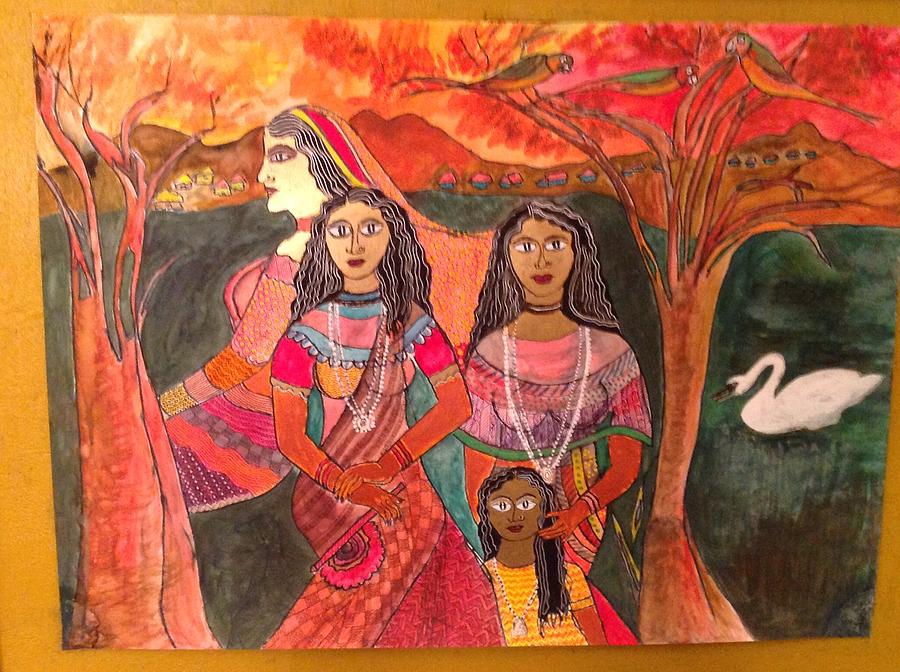
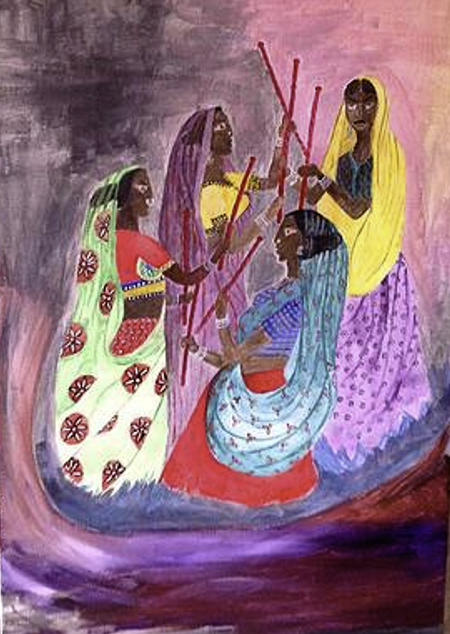
My Artwork!
You can also find my artwork on Fine Art America.
Garbha’s concentric spiralling
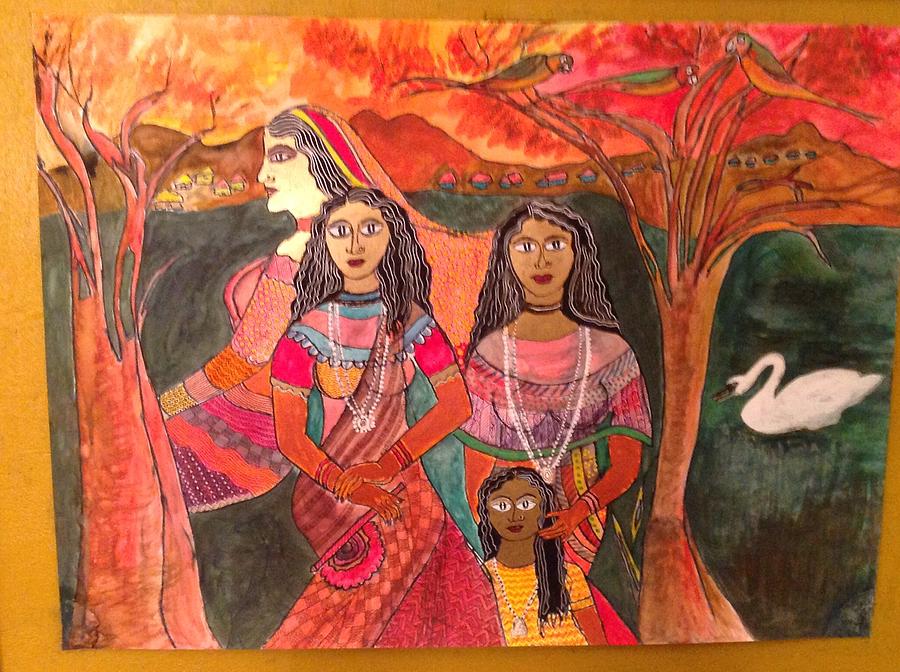
Four women and a swan
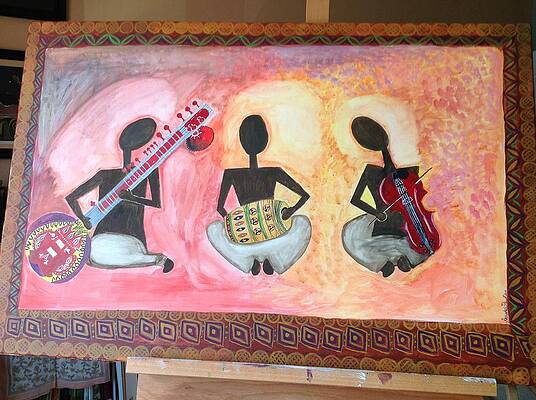
Rhythmic raagas
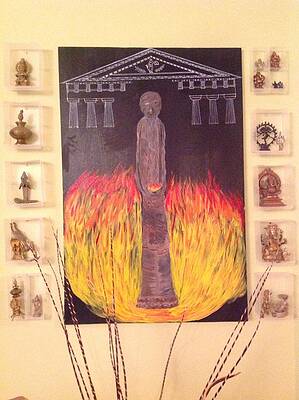
Sati Phoenix
The birth and death of patriarchy

Hill women (inspired by Amrita Shergil)

Da Vinci
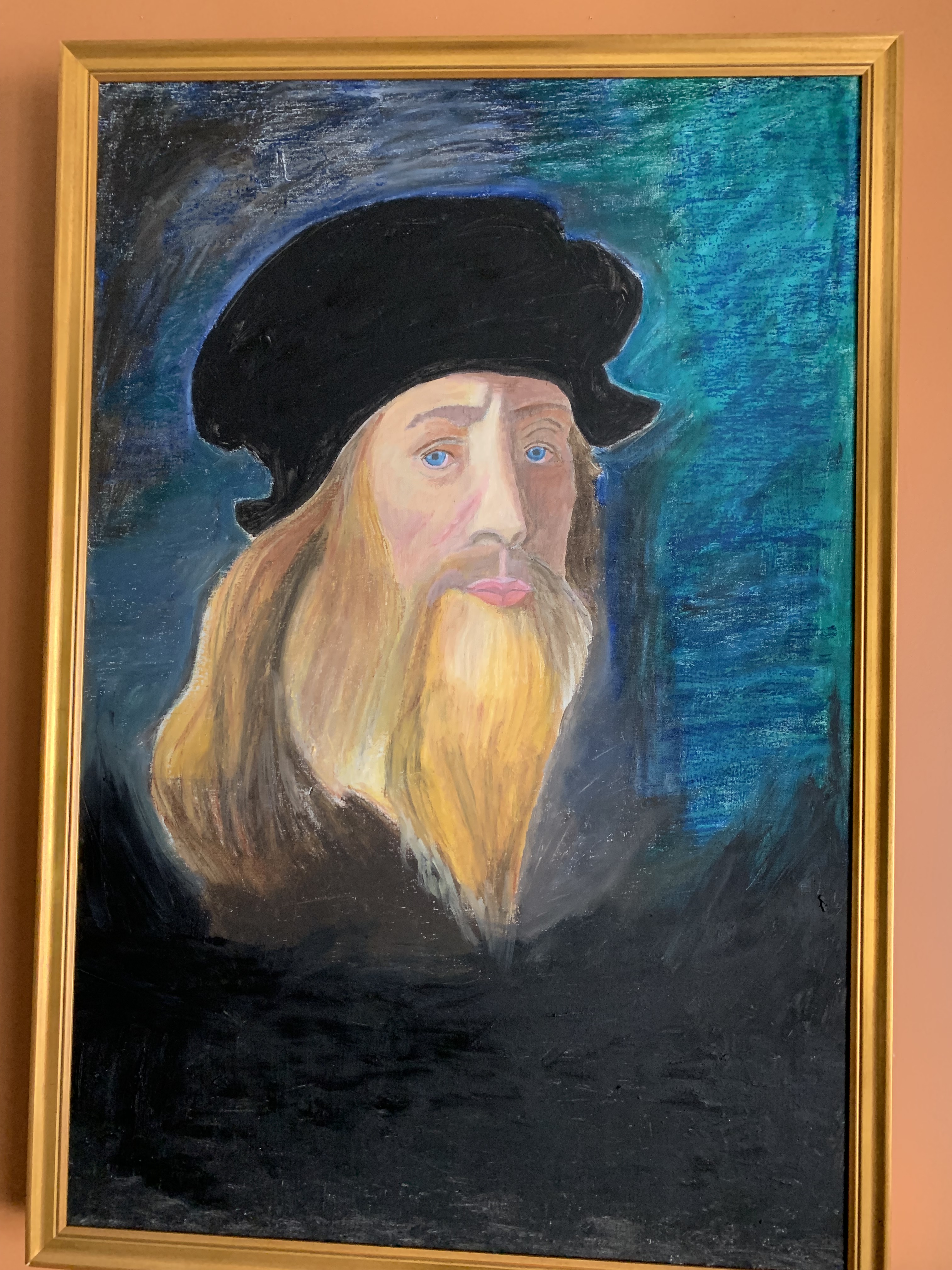
Mahesh the Renaissance Man
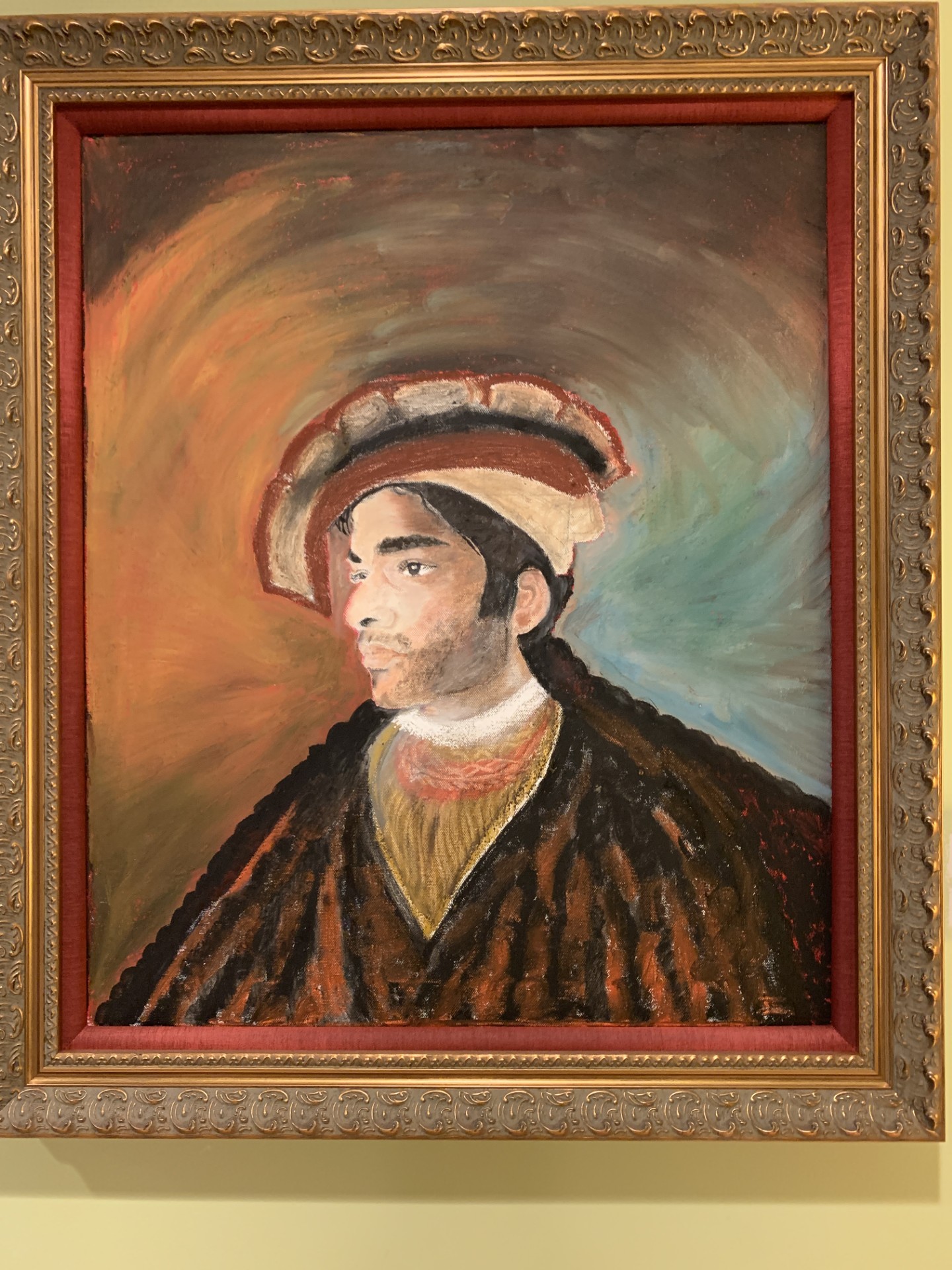
Shyaam the Renaissance Man

 Kamakshi P. Murti
Recent Comments