https://www.amazon.com/dp/B0FL8SZKKK
https://www.amazon.co.uk/dp/B0FL8SZKKK
https://www.amazon.de/dp/B0FL8SZKKK
https://www.amazon.fr/dp/B0FL8SZKKK
https://www.amazon.es/dp/B0FL8SZKKK
https://www.amazon.it/dp/B0FL8SZKKK
https://www.amazon.nl/dp/B0FL8SZKKK
https://www.amazon.pl/dp/B0FL8SZKKK
https://www.amazon.se/dp/B0FL8SZKKK
https://www.amazon.co.jp/dp/B0FL8SZKKK
https://www.amazon.ca/dp/B0FL8SZKKK
https://www.amazon.com.au/dp/B0FL8SZKKK
Category Archives: Uncategorized
Websites for “Murders Most Trans-Gressive”
Posted in Uncategorized
“Murders Most Transgressive”
Dear potential readers! Sad to say, my valiant attempts to enclose a couple of videos describing this my latest Leela/Meena murder mystery failed rather spectacularly! So here are some words that touch upon the themes that drive my story!
Transgressive?
Who defines the boundaries of morality?
Transgressive?
Who defines the boundaries of morality?
Who sets rules of behavior?
“Being oppressed means the absence of choices”
(bell hooks)
Indomitable sleuths

A story about bodies, voices, and stories brutally destroyed,
and yet never giving up the fight to claim their rightful place in society
Posted in Uncategorized
“Murders Most Trans-Gressive”
Introducing my latest Leela/Meena murder mystery set in the South Indian city of Chennai, and fraught with murder and mayhem! The book is available on Amazon.in
The following videos give you a frightening glimpse of how the most vulnerable in our society have very little recourse to safety from violence.
Posted in Uncategorized
Lalli unveils a window
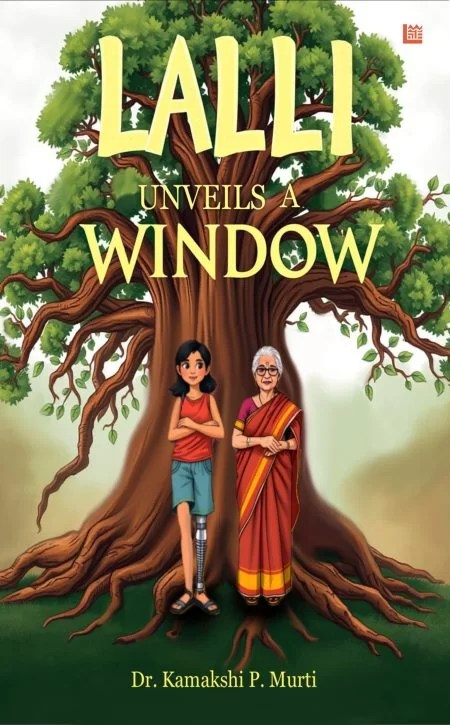
You, my reader, might question the value of the limerick that heralds each chapter in “Lalli unveils a window.” However, each limerick provides an appetizer for what is to come! Here are a couple of examples:
- There once was a gal who did swear
- She’d created a limb beyond compare
- If you pinched it, you’d hear
- An ‘OUCH’ oh so clear
- This limb that our Lalli did wear!
- There once was a boy who thought
- His parents and siblings were naught.
- He looked for a spark
- In places so dark
- That he cried out: “This isn’t what I sought!”
- When SWAT teams on television’s screen
- Do bulldoze their way to the scene
- We clap and we cheer
- To what does appear
- to be fatal for these guys so mean
- But Lalli and friends bore witness
- to real life police under duress,
- How they vanquished so quick
- With a charge oh so slick!
- Now the bad guys are stuck in their mess!
Happy reading!
Posted in Uncategorized
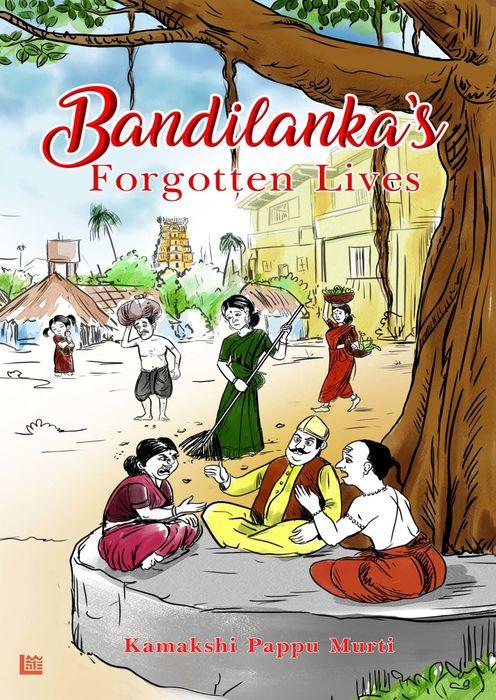
A story from my “Bandilanka’s Forgotten Lives”
A Child Rolls Beedis
"Mumtaz! Get up, my baby girl!"
Five-year-old Mumtaz shoved her skinny fists into her sleepy eyes.
“Already, Ammi? Do I have to?”
She felt her mother’s strong hand pull her up from the floor.
“Hurry up! Time is money! Here – take the neem 2 stick – chew properly on it if you don’t want your teeth to fall out! And your eyes – rub the sleep out of them.”
Mumtaz chewed on the neem and brushed her teeth with the bristles as she walked outside to the water pump. She turned her face upward to receive the gush of warm water. It felt so good.
“The eyes!” she thought and rubbed them. She ran back to the house. “Can’t miss today’s game.”
Her best friends Nimmi and Aliya were already so good at it. But she wanted to be the best. Her mother, older sister Salma, and three aunts were already busy at work. She snuggled close to her mother, and watched as the older woman picked up a pile of tobacco. For each beedi, she painstakingly placed the tobacco inside a dried leaf sourced from a local ebony tree, tightly rolled and secured it with a thread, then closed the tips using a sharp knife. When she had a bundle of 25, she placed the bundle in a wooden crate.
“Can I make one, Amma? Please?” Shaheeda Begum sighed.
“You have to promise to be careful. Yesterday, you destroyed so many. We can’t afford to …”
“No, no, Ammi! PLEASE! I promise, I’ll be so very careful.” She giggled. “I’m sure I can beat Nimmi and Aliya.”
Shaheeda Begum looked thoughtfully at her.
“Go to your sister! She’ll teach you.”
“Do I have to, Ammi? She scolds me and beats me.”
“Go, go! Don’t bother me. If we don’t meet today’s quota, you won’t have anything to eat. Salma, look after your sister.”
Older sister Salma cried out:
“She’s such a pest, Ammijaan!”
“Salma!”
Shaheeda Begum’s stern voice reverberated in the small room of their hut. Mumtaz ran over to her eleven-year-old sister, a ragged straw doll clutched in one clammy hand.
“Show me, Baji! Please? I won’t make trouble today, I promise. I’ll be very good.”
She sucked her thumb as she observed Salma working tirelessly, bent over the pile of tobacco and the stack of leaves. The daily quota for their household was 1500 beedis. Mumtaz slowly picked up a leaf and mimicked her sister’s movements. Soon the excitement of the game wore off and she got up.
“Where do you think you’re going?” Salma shouted.
“I’m tired, Baji! I want to play outside.”
Salma glanced at her mother and aunts. Shaheeda Begum beckoned to the little girl.
“Come here, child.”
Mumtaz ran up to her, tears streaming down her cheeks.
“Why does she scold me, Ammi? She is always scold… scolding me! I don’t like her.”
Shaheeda Begum sighed.
“Haye Allah! What have I done to deserve this?”
She stroked her daughter’s cheek, and wiped the tears with the end of her sari.
“Sit here with me. Just watch me. Don’t you want to be better than Nimmi and Aliya?”
“Yes, Ammi. But all day long? Can I play? Please? And my dolly wants to go outside.”
She shook her doll’s head.
“You want to play, don’t you, Puchki?”
“Look!” she cried, placing a beedi in her mouth. “Aalam Sahib across the road does this the whole day long!”
Aunt Nargis Begum put down the beedi she had been rolling.
“It is time, Shaheeda Behen, to tell her.”
Shaheeda Begum placed an aching hand on the small of her back. She could barely sit straight. Twelve hours a day of squatting on the floor and hunched up to roll beedis had taken a heavy toll on her health.
“Tell her what, Nargis Behen? Tell her that I can’t send her to school? Tell her that she cannot play with her friends, with her doll? Tell her that her childhood is over?”
The silence in the room was deafening.
Posted in Uncategorized
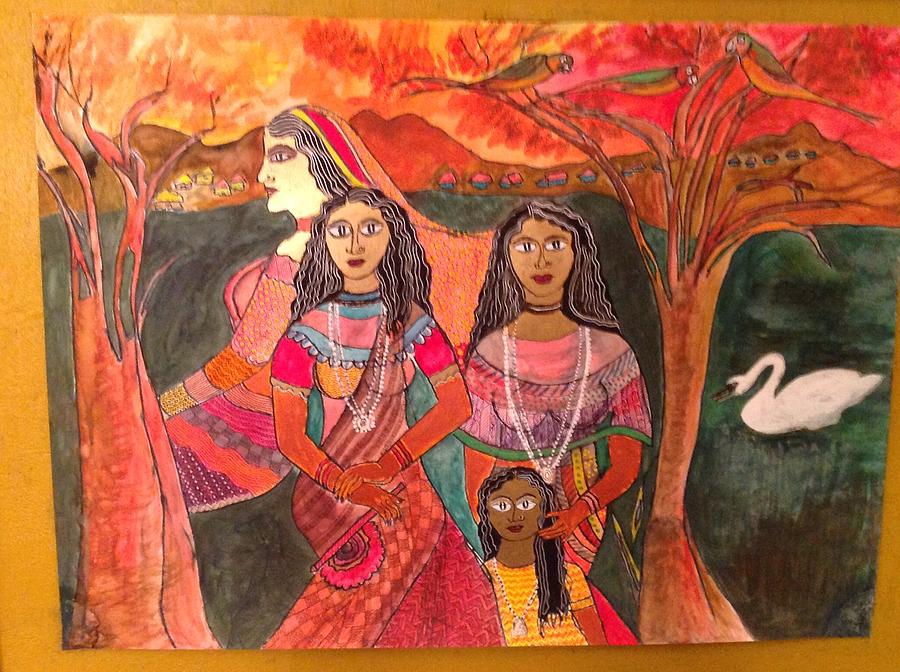
“Bandilanka’s Forgotten Children” – forthcoming!
A sequel to “Bandilanka’s Forgotten Lives,” these stories focus on those children who have fallen by the wayside.
Posted in Uncategorized
Murders Most Trans-Gressive
COMING SOON!
Leela and Meena, those two super South-Asian female sleuths of mine – 21st century avatars of Agatha Christie’s Jane Marple – are at it again! Nothing stops them from catching murderers. In “Murders Most Trans-Gressive,” they face a new challenge to their investigative skills: the brutal murders of two members of the LGBTQ+ in India. An in-depth view into the lives of these disenfranchised groups via their theatrical performances lead the cousins to go on a crusade on their behalf.
Nonfiction: my scholarly articles
CHAPTERS IN SCHOLARLY BOOKS AND MONOGRAPHS:
“Sanskrit Drama and Fin-De-Siecle Germany Frank* Wedekind’s Sonnenspektrum and Lion Feuchtwanger’s Vasantasena” in: University of Florida Department of Classics Comparative Drama Conference Text and Presentation, edited by Karelisa Hartigan, vol. IX; (Gainesville, Florida: The University of Florida Department of Classics Comparative Drama Conference papers, 1989), pp.99-114.
“Impotenz als Impuls zur schöpferischen Tätigkeit: Georg Kaisers König Hahnrei,” in: Wegbereiter der Moderne, Sonderdruck, Festschrift für Klaus Jonas, ed. Helmut Koopmann and Clark Muenzer (Tübingen, Germany: Max Niemeyer, 1990), pp.114-123. (English Title: “Impotence as Impulse towards Creative Activity: Georg Kaiser’s König Hahnrei”)
“Teaching Literature at the First-Year Graduate Level: The Quantum Leap from Language to Literature,” in: Challenges of Literary Texts in the Foreign Language Classroom, eds. Lothar Bredella and Werner Delanoy (Tübingen, Germany: Gunter Narr Verlag, 1996), pp.185-204.
“Visionary or Hysteric? Mechthild von Magdeburg and Ingeborg Bachmann” in: Medieval German Studies as a Paradigm for German Studies. Albrecht Classen, ed. Rodopi Verlag, Amsterdam, The Netherlands, 2000.
“Die Desorientierung des Orientalisten im Schatten von Edward Said,“ in: Okzidentbilder: Konstruktionen und Wahrnehmungen. Martina Winkler and Ute Dietrich, eds. Leipziger Universitätsverlag, Leipzig, Germany, 2000.
„Whose Identity? The Nonnative Teacher as Cultural Mediator in the Language Classroom,“ in: ADFL Bulletin, Vol. 34 No. 1, Fall 2002, 26-29.
„Inventing the Orient: Discursive Alliances of the Philosopher, Historian, and Fiction-writer,“ in: Imperialisms: Historical and Literary Investigations, 1500-1900. Ed. Balachandra Rajan & Elizabeth Sauer. Palgrave-Macmillan, October 2004. (DOIhttps://doi.org/10.1057/9781403980465_14)
Articles in Refereed Journals:
“Der Reinkarnationsbegriff in Hesses Glasperlenspiel” in: Indo-German Studies and German Studies in India, 8 (1977), pp.10-12.
“Eine aussichtsreiche Lehrmethode für fachspezifische Kurse am Ende des zweiten Jahres” in: Die Unterrichtspraxis, Volume 21, Number 2, Fall 1988, pp.186-190. (English Title: “A Promising Method for Teaching Specialized Topics Courses at the End of the Second Year”)
“Parodie und Trivialisierung als Schreibvarianten beim Leser-Autor: Versuch eines paradigmatischen Modells für die Indienrezeption bei Thomas Mann und Hermann Hesse,” in: Colloquia Germanica, Band 22, 3/4, 1989, pp.222-243. (English Title: “Parody and Trivialization as Modes of Writing for the Reader-Author: https://www.jstor.org/stable/i23965934 Attempt at a Paradigmatic Model for the Reception of India by Thomas Mann and Hermann Hesse”)
“Gespräche mit Minoritäten” (with Shirley Jones and Gabriela Strauch) in: Die Unterrichtspraxis, 1992, Number 2, pp.166-173. (English Title: “Conversations with Minorities”)
“Teaching Literature at the First Year Graduate Level: the Quantum Leap from Language to Literature and its Curricular Implications.”, in: ADFL Bulletin, Association of Departments of Foreign Languages, Fall 1993, Vol.25, No.1, 41-48. https://www.mla.org/bulletin/issue/adfl.25.1/
CrossRef DOI:10.1632/adfl.25.1.41
“Father-Daughter Relationship”; “Minority Literature”; “Die Exotin”; “Mysticism,” entries in: The Feminist Encyclopedia of German Literature (Westport, Connecticut; London: Greenwood Press, 1997)
“Was ist die Mehrzahl von Heimat?“: Nationalism, Identity, and Citizenship in Gertrud Kolmar’s Eine jüdische Mutter and Emine Sevgi Özdamar’s Das Leben ist eine Karawanserei,“ in: Der untote Gott: Religion und Ästhetik in der deutschen und österreichischen Literatur des 20. Jahrhunderts, edited by Olaf Berwald and Gregor Thuswaldner. Köln/Weimar/Wien: Böhlau, 2007.
Articles
“To Veil or not to Veil? The ħijāb as a Marker of Alterity,” in: Steven D. Martinson and Renate A. Schulz, eds., Transcultural German Studies / Deutsch als Fremdsprache. Building Bridges / Brücken bauen. Peter Lang Kongreßberichte, Bd. 94. Bern, Berlin, Bruxelles, Frankfurt am Main, New York, Oxford, Wien, 2008.
“Friedrich Max Müller – Vedic ‘rşi’ or untouchable mleccha … or …?” in: Jörg Esleben, Christina Kraenzle and Sukanya Kulkarni, eds., Mapping Channels between Ganges and Rhine: German-Indian Cross-Cultural Relations. Newcastle, UK: Cambridge Scholars Publishing, 2008, 51-81. https://www.cambridgescholars.com/product/9781847185877
‘Deliberative Dialogue’ as a Tool for Promoting Social Justice and Transcultural Awareness in the German Language Classroom,” in: Renate A. Schulz and Erwin Tschirner, eds., Communicating across Borders: Developing Intercultural Competence in German as a Foreign Language. Munich, Germany: Iudicium Verlag, 2008.
“To Veil or not to Veil: Germany and Islam,” in: The proceedings of the Conference on Knowledge, Creativity and Transformation Of Societies, Vienna, Austria, December 6 to 9, 2007.
“Deliberative Dialogue as a Pedagogical Tool for Social Justice,” in: Social Justice Education – Inviting Faculty to Transform Their Institutions. Eds. Kathleen Skubikowski, Catharine Wright, and Roman Graf. Sterling, VA: Stylus, 2009.
„Ob die Weiber Menschen seyn?“ Hesse, Women and Homoeroticism,“ in: Ingo Cornils, ed., A Companion to the Works of Hermann Hesse, Rochester, NY: Camden House, 2009.
„Deliberative Dialogue,” in: Arne Weidemann, Jürgen Straub, Steffi Nothnagel, eds., Wie lehrt man interkulturelle Kompetenz? Theorie, Methoden und Praxis in der Hochschulausbildung. Bielefeld, Germany: transcript Verlag, 2010.
“Germany’s India: A critical re-interrogation”, in: Imagining Germany Imagining Asia (Studies in German Literature Linguistics and Culture), edited by Veronika Fuechtner and Mary Rhiel. Rochester, NY: Camden House, 2013.
Posted in Uncategorized
Nonfiction: My Scholarly Monographs
You can also access my academic publications here:
Die Reinkarnation des Lesers als Autor / The reincarnation of the reader as author
You can buy the book at Amazon India or Amazon.com

The purpose of this dissertation is to redefine the relationship between classical Indian literature and modern German literature. Almost all the criticism surveyed has been an analysis of the influence of the sacred texts of India on German literature. The result was a refusal to acknowledge the writing of the Germans as a creative process. Their works were viewed as distortions of the original texts.
The perceptions of texts as sacred or profane is culturally rooted and German writers have often interpreted as profane that which the Indians consider sacred. This difference in perception explains why German writers have received certain themes from literature and restructured them within the framework of their own creative ambitions.
The dissertation focuses on the reception of Indian literature between the 3rd and 8th centuries A.D. by three modern German writers–Frank Wedekind, Lion Feuchtwanger and Hermann Hesse–and analyses the process by which these writers shed their role as reader and expand their own creative horizon by transforming the Indian material. A clear thematic and structural link between these three authors is provided by their reception of two genres in Indian literature, viz. the drama and the treatise (especially that on erotic love), because both genres deal with prostitution, and the ascetic-erotic-central concerns of these writers.
In his Das Sonnenspektrum, Wedekind destroys the idyllic concept offered by the Indian material. In the process he creates his own brand of aesthetized eroticism which is not unlike that in the Indian play. Feuchtwanger’s projection of the idyll in Vasantasena results from a conscious politicizing of language with a view to changing society. Certain key notions of philosophy which had served the Indian dramatist to reinforce the hierarchical structure of his society are altered by Feuchtwanger to mirror his own belief in a classless society. Hesse’s Siddhartha presents the idyll as a means of escaping the reality of society. He mixes mystical with idyllic elements and thus fails to achieve the pure form of the idyll and its potential for renewing lost values or creating new ones.
The concluding chapter of the dissertation provides points of reference to characterize the process of reception. These could be used paradigmatically to analyze problems of influence and reception in other works, especially when the source material originates in an alien culture.
INDIA: THE SEDUCTIVE AND SEDUCED ‘OTHER’ OF GERMAN ORIENTALISM

You can buy this book at Amazon.in or Amazon.com
Germans of various disciplines not only encouraged but actively framed a discourse that gendered India through voyeuristic descriptions of the male and female body. This study challenges the German’s claim to an encounter with India projected on a spiritual plane of communion between kindred spirits and shows that such supposedly apolitical encounters are really strategies of domination. German participation in European Expansion can be perceived as collusion with the British imperialist administration inasmuch as it provided the latter with a justification for existing colonial rule and anticipated future colonial activity. Despite the optimism placed in the post of post-colonialism, the continued presence of European Orientalism can be felt in the late 20th century, hidden under the mantel of global capitalism.
Although Germany did not colonize India territorially, Germans of various disciplines not only encouraged but actively framed a discourse that gendered India through voyeuristic descriptions of the male and female body. German orientalist experiences of Hindu India have typically been excluded from post-colonial debates concerning European expansion, but this study challenges the German’s claim to an encounter with India projected on a spiritual plane of communion between kindred spirits and shows that such supposedly apolitical encounters are really strategies of domination. German participation can be perceived as collusion with the British imperialist administration inasmuch as it provided the latter with a justification for existing colonial rule and anticipated future colonial activity. Murti sheds light on the role that missionaries and women, two groups that have been ignored or glossed over until now, played in authorizing and strengthening the colonial discourse.
The intertextual strategies adopted by the various partners in the colonialist dialog clearly show that German involvement in India was not a disinterested, academic venture. These writings also betray a bias against women that has not been regarded, until now, as a key issue in the literature discussing Orientalism. Missionaries often actively fostered the British colonial agenda, while women travelers, even those who traveled as a means of escaping patriarchal structures at home, invariably abetted the colonizer. Despite the optimism placed in the post of post-colonialism, Murti concludes that the continued presence of European Orientalism can be felt in the late 20th century, hidden under the mantel of global capitalism.
TO VEIL OR NOT TO VEIL: EUROPE’S SHAPESHIFTING ‘OTHER’

You can buy this book at Amazon.in or Amazon.com
Immigration has become a contentious issue in Europe in recent decades, with immigrants being accused of resisting integration and threatening the secular fabric of nationhood. The most extreme form of this unease has invented and demonized an Islamic ‘other’ within Europe. This book poses central questions about this global staging of difference. How has such anxiety increased exponentially since 9/11? Why has the Muslim veil been singled out as a metaphor in debates about citizenship? Lastly, and most fundamentally, who sets the criteria for constructing the ideal citizen?
This study explores the issue of gender and immigration in the national contexts of Germany and France, where the largest minority populations are from Turkey and North Africa, respectively. The author analyzes fictional works by the Turkish-German writers Emine Sevgi Özdamar and Zafer Şenocak and by Francophone writer Malika Mokeddem. All three deconstruct binary oppositions and envision an alternate third space that allows them to break out of the confines of organized religion. In the latter part of the book, the voices of young Muslim women are foregrounded through interviews. The concluding chapter on the pedagogical tool Deliberative Dialogue suggests ways to navigate such contentious issues in the humanities classroom.
Posted in Uncategorized

Recent Comments